WordPress Was the Right Answer in 2015 — Here's the WordPress Alternative
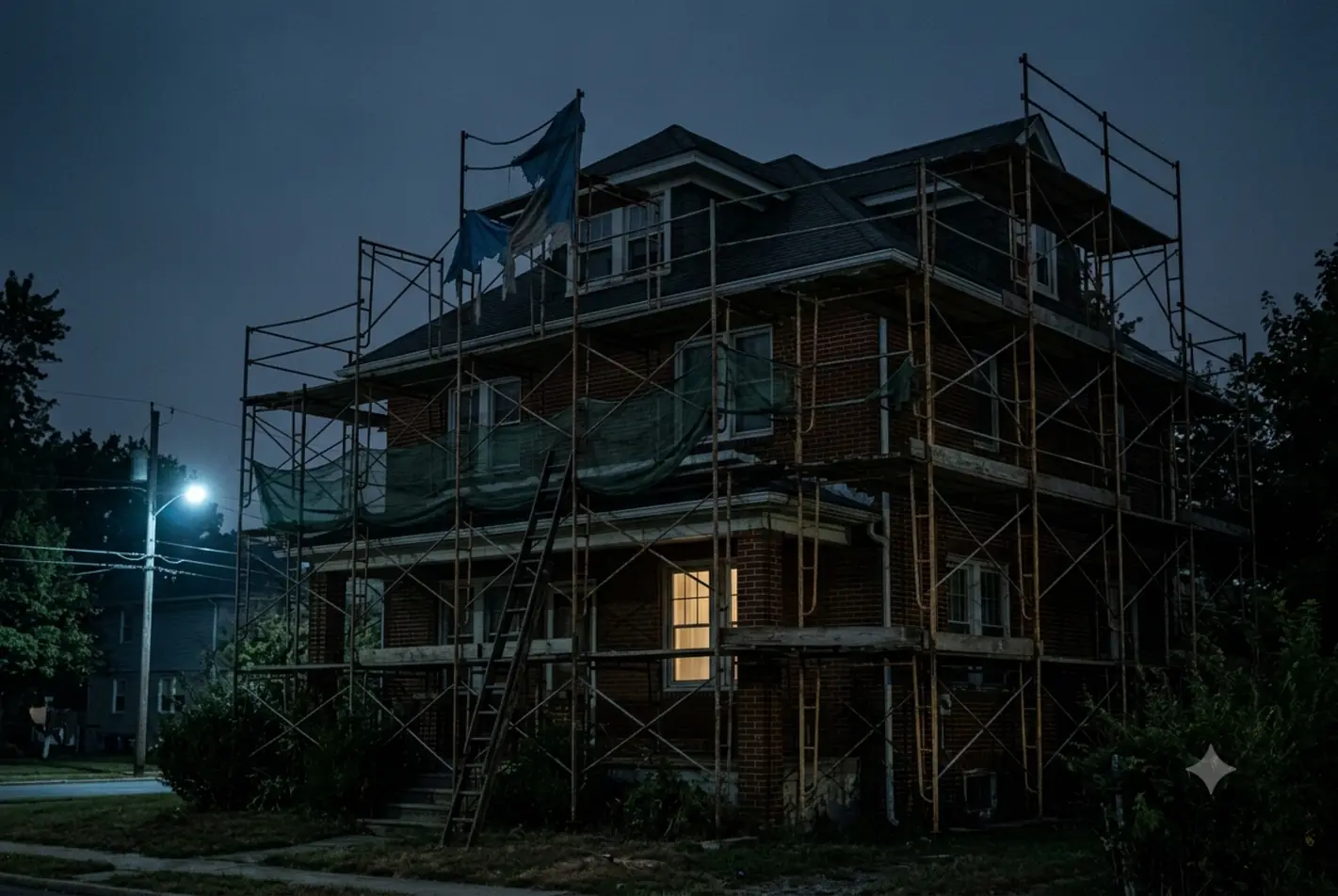
Let's start with something most people writing about a WordPress alternativeAny modern way of building a website that doesn't run on WordPress — in this article, sites built directly as fast, custom code, with no CMS or plugins to maintain. won't say: WordPress deserved to win.
In 2015, if you owned a business and needed a website, WordPress was the honest recommendation. It was free. It had themes for every industry and a plugin for every feature. Thousands of developers knew it. Compared to what it replaced — static pages you had to pay a developer to touch, or site builders that locked you in — it was a genuine liberation. That's why it ended up powering close to half the internet. Nobody gets there by accident.
So this isn't a hit piece. It's an honest reckoning with a tool that was right for its time — and an explanation of why its time is over.
What you actually signed up for
Here's the thing nobody explains when you get a WordPress site: you didn't buy a website. You adopted a system — and systems need feeding.
A WordPress site is really a stack of separate pieces pretending to be one thing. There's WordPress itself. On top of that, a theme — someone else's design decisions, which you customize until it looks like yours. On top of that, pluginsThird-party add-ons that give a WordPress site its features — forms, galleries, SEO, backups. Each is extra code from a different author that must be kept updated, patched, and compatible with all the others. — one for your contact form, one for SEO, one for backups, one for speed (we'll get to the irony of that), one for security, one for the gallery. A typical site runs a dozen or more. Each one is written by a different author, on a different schedule, with different standards.
And every one of those pieces has to keep working with every other piece, forever, through every update.
That's the deal. It was a reasonable deal in 2015, because the alternative was worse. It's just not the deal anyone would design today.
The four taxes
Ask anyone who's owned a WordPress site for a few years and they'll recognize all four of these. They're not failures of your particular site or your particular developer. They're properties of the system.
The update tax. WordPress, your theme, and every plugin ship updates constantly — and you're gambling either way. Update, and something may break; security researchers consistently find that the overwhelming majority of WordPress vulnerabilities live in plugins, so skipping updates isn't safe either. Every update is a small spin of the wheel. Most spins are fine. You only remember the one that took your site down the night before a launch.
The speed tax. Every theme feature you don't use, every plugin, every page-builder layer loads code on every visit. That's bloatThe layers of extra software — themes, plugins, page-builder code — that load on every page of a WordPress site, slowing it down for every visitor., and it accumulates the way weight does: a little at a time, until one day your site scores in the 30s on Google's own speed test and you're shopping for a caching plugin — more software to compensate for too much software. Meanwhile Google uses speed in rankings, and your visitors use it in patience.
The maintenance tax. Somebody has to tend all this. Either you pay a monthly care plan for the privilege of keeping software compatible with itself, or you become the person who does it, or nobody does it — which works right up until it very much doesn't. None of those three options makes your business any money.
The 2am tax. Ask around and you'll hear the same story with different details: an update went wrong, the site went blank — the famous white screen — and it happened at the worst possible moment, because that's the only kind of moment there is. The panic isn't really about the outage. It's the realization of how many separate things you own that can break, and how few of them you understand.
None of this is WordPress being bad. It's WordPress being old — an architecture from an era when assembling a site out of third-party parts was the only affordable way to get one.
What changed
What changed is the economics of writing custom code.
The reason WordPress won was that custom-built websites were expensive. A site built directly as code — fast, exactly to your needs, nothing extra — was something only companies with serious budgets could order. Everyone else assembled one from parts, and accepted the taxes.
AI ended that. Building a site as clean, custom code — the kind that used to take a development team weeks — is now days of work. And a site built that way simply has nowhere for the taxes to live. There are no plugins, so there's no update roulette and no plugin attack surface. There's no theme or page-builder layer, so there's no bloat — the site loads only what it needs, which is why it scores where WordPress sites can't. There's no CMSContent Management System — the admin dashboard you log into to edit pages and posts. Powerful, but a whole extra software layer to learn, secure, and keep updated. WordPress is the most famous one. to secure and maintain, because there's no CMS at all.
The predictable objection: no CMS? How do I add a blog post or change a price? In plain English — literally. You say what you want changed, and it's done, correctly, without breaking anything else. That's not a workaround for a missing dashboard; it's what the dashboard was always trying to be. The admin maze was never the goal. The change was the goal.
To be fair: when WordPress is still the right call
Honesty cuts both ways, so: if your site is genuinely working — it loads fast, ranks well, converts visitors, and someone competent maintains it — there is no emergency. Nobody should rebuild a working asset out of fashion. And if your whole operation runs on a specific WordPress ecosystem your team knows deeply, the switching cost is real and deserves respect.
But notice what those exceptions have in common: they describe a site that's succeeding. If yours is slow, brittle, expensive to change, or quietly leaking visitors — the taxes are already being paid. The only question is whether you keep paying them.
The 2015 question and the 2026 question
In 2015, the question was: "How do I get a website without a developer's budget?" WordPress was the right answer, and it earned every bit of its dominance.
In 2026, the question is different: "Why am I still paying maintenance taxes on 2015's answer?"
A website should be an asset — something you own outright, that gets faster and better, that nobody has to tend at 2am. That's what we build, and we're confident enough in the difference to build yours before you pay anything. Look at your actual homepage, live at a link. If you love it, we build the rest. If you don't, you owe nothing — and you'll still know more about what your current site is costing you than any care-plan invoice ever told you.
Either way, run Google's speed test on your site today. The number will tell you whether this article was about you.
Keep reading
Capacity Without Headcount: How AI Agent Teams Actually Work
A team you never hired can plan, execute, and check complex work in hours. That's capacity without headcount — and verification is the architecture that decides whether you can trust what comes back.
Read This Before You Implement AI in Your Business
Almost everyone buys the AI tool before diagnosing the problem — and the data shows how badly that ends. Here's how to find your real first move.